
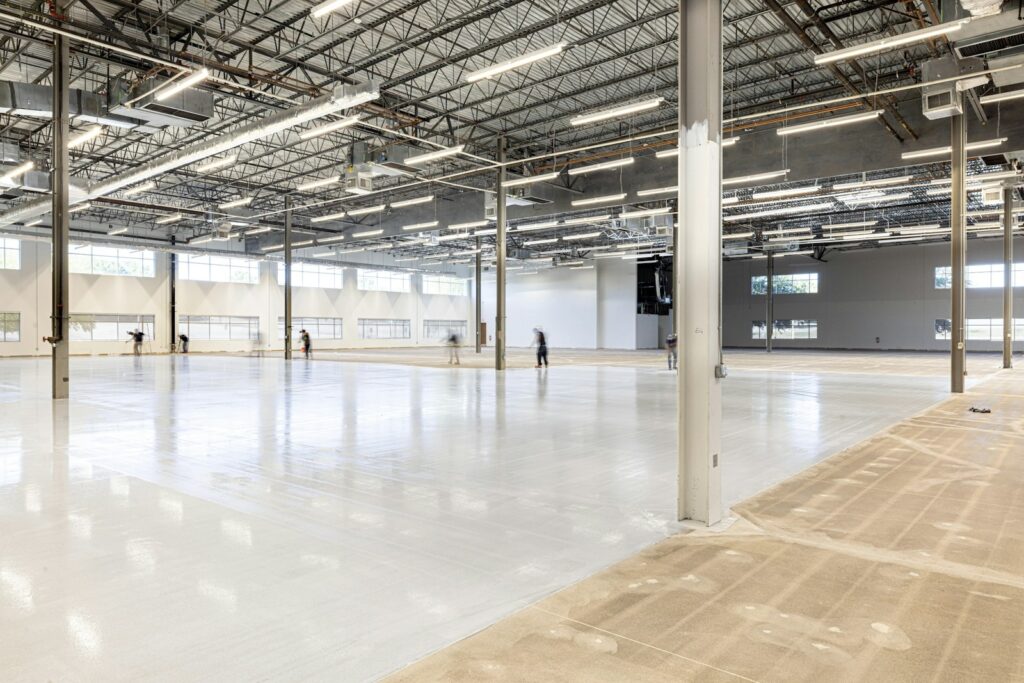
A surprising number of data centers were never meant to be data centers. They began as warehouses, offices, or industrial buildings and were fitted out for compute later. That works up to a point. For dense AI and high performance workloads, the difference between a building adapted for compute and one designed for it from the start shows up quickly.
The retrofit problem
Retrofitting means working within decisions that were made for another purpose. Floor loading, ceiling height, the routes for power and cooling, where heat can go: all of it was fixed before compute was ever on the table. You can engineer around these constraints, and good operators do, but every workaround costs efficiency, flexibility, or both. The building is always slightly fighting the job it has been given.
What purpose-built changes
Designing a facility around compute means starting from the loads it will carry. Power capacity, redundancy, and the paths that distribute it are sized for the job. Cooling is chosen for the density the rooms are meant to hold rather than what an old building happened to allow. Airflow, containment, and the space for water based cooling are part of the plan rather than an afterthought. Even the way heat leaves the building can be designed in, which keeps options like heat recovery open. None of this is visible in a finished workload, but all of it decides how efficiently that workload runs.
Building it right takes longer
Purpose-built has a cost, and the cost is time. Putting in the right power, drainage, and cooling from the ground up is slower than moving into a space that already exists, and we have felt that directly during our own build. We would rather be honest about the schedule than cut corners that a customer would pay for later in reliability or efficiency. A facility meant to run demanding compute for years is worth building properly once.
What it means for you
For a team choosing where to run AI or high performance work, purpose-built is not a slogan, it is a set of practical advantages: density the rooms can actually support, cooling matched to that density, redundancy that was planned rather than patched, and a building that is not quietly working against your workload. It is the difference between a site that tolerates compute and one that was made for it.
Our Riihimaki facility is being built from the ground up for compute, with capacity coming online in 2027. If you are planning a demanding deployment, it is worth talking early.