
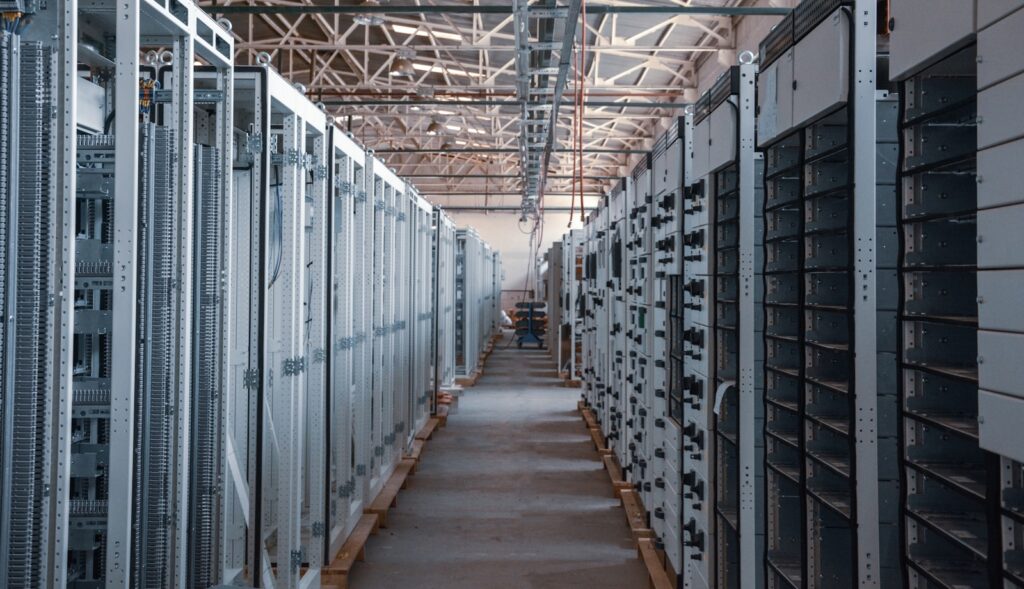
Cooling is where a lot of data center design quietly happens. For years air was enough for almost everything. Then AI workloads pushed hardware density up sharply, and the old assumption stopped holding. The result is a real choice between air and liquid cooling, and the right answer depends on what you are running.
Why density changed the question
A traditional server rack produced a manageable amount of heat spread over a fair amount of space. Modern accelerators concentrate far more power into the same footprint, and the heat comes with it. Air is a decent way to move modest amounts of heat, but as density climbs it has to move faster and in greater volume to keep up, and eventually it runs out of room. That is the point where many operators start looking at liquid, not because it is fashionable but because air is doing all it can.
Where air cooling still fits
Air cooling is simple, well understood, and perfectly adequate for a large share of workloads. General purpose servers, storage, inference at modest scale, and plenty of standard compute run comfortably in a well designed air cooled hall with proper separation of hot and cold air. Simplicity has real value: fewer moving parts, familiar maintenance, and less to go wrong when something needs fixing at two in the morning. For these workloads, reaching for liquid would add cost and complexity without buying much.
Where liquid earns its place
For high density compute, liquid cooling changes what is possible. Water carries heat far more effectively than air, so it can keep dense hardware in range where air would struggle, and it does so using less energy to move the same heat. It also makes heat recovery practical, because warm water is far easier to capture and reuse than warm air. The trade is more plumbing and more careful engineering, which is worth it precisely when density is high enough that air cannot cope.
Matching cooling to the workload
The sensible approach is not to pick a side but to match the method to the job. We are building standard density capacity with direct air cooling and high density capacity with water based cooling, so a workload can sit in the environment that suits it rather than being forced into one model. A training cluster and a fleet of general purpose servers have different needs, and a facility that offers both does not make you compromise.
We are still in the build phase, with capacity coming online in 2027. If you know roughly how dense your deployment will be and want to think through which approach fits, it is worth a conversation early.