
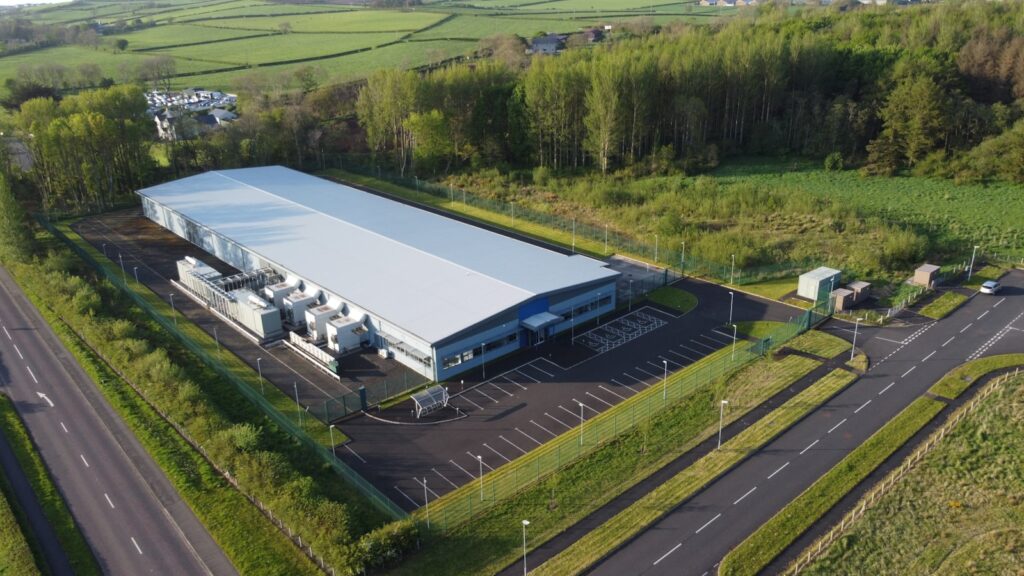
Every data center turns electricity into computation, and almost all of that electricity leaves again as heat. The interesting question is what happens to the heat next. In most of the world it is simply released into the air. In the Nordics there is a more useful answer, and it is shaping how we are building the facility in Riihimaki.
Why compute runs hot
A rack of hardware running an AI training job draws a large, steady load, and physics is blunt about the result: nearly all of that energy becomes heat. The denser the hardware, the more concentrated the heat becomes. Keeping equipment inside its safe operating range is one of the central jobs of any data center, which is why cooling and power define a facility far more than the servers sitting in it. Get the heat wrong and nothing else matters. Get it right and you have room to think about what to do with it.
The Nordic advantage
Finland helps in two ways. For much of the year the outside air is cool enough to do part of the cooling work on its own, which lowers the energy spent moving heat around. Just as useful, Finnish towns run district heating networks, the same pipes that keep homes and offices warm through the winter. The heat a data center produces is low grade, but it is constant and it is real, and a district heating network is one of the few neighbours large enough to absorb it. Warm water leaving a server hall is a waste product in one setting and an input in another.
Designing for reuse from the start
Recovering heat is much easier when it is planned in rather than added later. The high density part of our facility is being built around water based cooling, which carries heat away more effectively than air and makes it practical to capture and move. We are honest that a live connection to local heating depends on the surrounding network and on reaching enough scale to be worth the engineering, so we treat it as a goal rather than a finished feature. What matters during the build is that the design keeps the option open instead of closing it off.
What it means for the people running the workload
Reusing heat does two things at once. It returns energy that would otherwise be thrown away to the community around the site, and it improves the overall efficiency of the facility. For a team running compute with us, it means the work sits in a building designed to waste as little as possible, on a grid that is already among the cleaner ones in Europe. It does not change what your servers do. It changes the footprint of doing it, which is increasingly something customers and their own customers ask about.
The facility is still in its build phase, with capacity coming online in 2027. If you are planning compute for late 2027 and you care where it runs and what happens to the heat it makes, it is a good time to talk.